When Your Rabbit Eats Its Own Night Feces – A Gross Habit or a Hidden Superpower?
- Quick Tags: rabbit eating poop, cecotropes in rabbits, rabbit digestive health, rabbit diet hay
- Editor: Chloe Jones
- Updated: May,23,2026
- Views: 486.2k


You sit down to pet your rabbit. She’s grooming herself happily. Then she lowers her head, reaches between her back legs, and eats something that just came out of her body. You look away in disgust.
E.g. :Your cat pushes your coffee mug off the table. She is not being naughty.
“Why does she do that?” you wonder. “Is she missing nutrients? Is something wrong with her stomach?”
Most rabbit owners react with horror. But here’s what exotic vets and behaviorists wish everyone knew: That “gross” habit is not a problem – it’s a sign of a healthy digestive system. And stopping it could literally starve your rabbit.
A first-time rabbit owner saw her bunny eating feces and rushed to the emergency vet. She was convinced her rabbit had a mental disorder or a severe nutrient deficiency.
The vet smiled. “That’s just a cecotrope. Your rabbit is perfectly normal.”
The owner had never been told that rabbits produce two kinds of poop. The hard, dry pellets you see in the litter box are one type. But at night, rabbits produce soft, mucus-covered “night feces” called cecotropes. They eat these directly from the anus – not because they’re sick, but because their bodies need to absorb nutrients the first time around.
Challenge the conventional wisdom: A rabbit who does not eat her cecotropes is the one with a problem. Refusing cecotropes points to dental pain, obesity, or a diet too rich in pellets and too low in hay. The “gross” habit is actually a sign of excellent digestive health.
Cecotropes are small, soft, shiny, and shaped like a cluster of grapes. They smell different from normal pellets – more like fermented grass. Rabbits usually eat them directly from the anus as they exit, so most owners never witness the act. If you see cecotropes left uneaten in the cage, that’s a red flag, not a relief.
Rabbits have a unique digestive system designed for high-fiber, low-nutrient food. Understanding the two types of poop changes everything about how you feed your rabbit.
These are the final waste products. Your rabbit eats hay, digests what she can, and the rest becomes dry, round pellets. These are not eaten again.
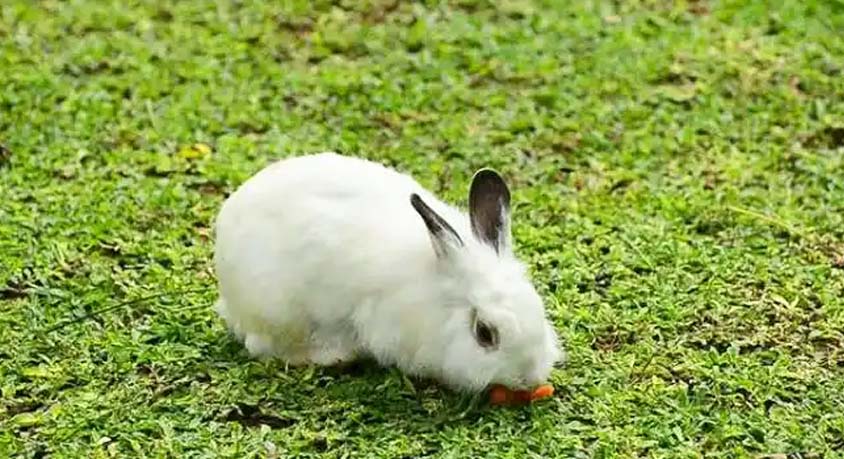
These are produced in the cecum (a special fermentation chamber). They contain B vitamins, amino acids, and fatty acids that the rabbit’s body needs. By eating them directly, the rabbit absorbs these nutrients the second time through the digestive tract. This process is called cecotrophy.
A rabbit who does not eat her cecotropes will eventually develop malnutrition – even if she eats plenty of food.
If you find mushy, uneaten cecotropes smeared on the cage floor or stuck to your rabbit’s bottom, something is wrong. The most common cause is diet.
Pellets are rich and low in fiber. A rabbit who eats too many pellets produces excessive, sticky cecotropes that she cannot eat cleanly. These get left behind.
The fix: Limit pellets to 1-2 tablespoons per 2 pounds of body weight daily. Unlimited rabbit hay feeder with grass hay (timothy, orchard, meadow) should be 80% of her diet. Hay fixes most cecotrope problems within a week.
An overweight rabbit cannot physically reach her anus to eat cecotropes. The uneaten clumps stick to her fur, attracting flies (fly strike – a deadly emergency).
The fix: Use a digital kitchen scale to weigh your rabbit weekly. Track weight changes. Reduce pellets and treats. Increase exercise with a large exercise pen.
You don’t need to “train” your rabbit to eat cecotropes – it’s instinctive. But you can create an environment that makes it easier.
Spread a treat scatter mat with small amounts of hay and a few pellets. Rabbits who forage naturally are more active and maintain healthy weights, which helps them reach their cecotropes.
A rabbit who sits in a dirty litter box may refuse to eat cecotropes that fall there. Use a large, low-sided box with paper-based litter (no clay or cedar). Place the hay feeder directly over the litter box – rabbits eat hay while pooping.
If you’ve fixed the diet and your rabbit still leaves cecotropes, see a rabbit-savvy vet. Possible causes:
A rabbit who suddenly stops eating cecotropes after years of normal behavior needs a physical exam.
If cecotropes are pasted to your rabbit’s rear and attracting flies, wash the area gently with warm water and dry thoroughly. Fly eggs hatch in hours and eat into the skin. This is a life-threatening emergency.
You felt disgusted. You may have even tried to stop your rabbit from eating her cecotropes. You’re not alone – most owners react the same way.
But now you know the truth: that “gross” habit is the reason rabbits survive on grass. Without it, they would starve.
Tomorrow, look at your rabbit’s diet. Is hay unlimited? Are pellets limited? Is she overweight?
And the next time you see her lower her head and eat directly from her bottom? Don’t look away in disgust. Smile. She’s just getting her second breakfast – the most important meal of her day.
You’ve got this. And her gut thanks you for finally understanding.