Why Does Your Hamster Suddenly Freeze Like a Statue?
- Quick Tags: hamster behavior guide, small pet stress signs, dwarf hamster care, indoor hamster habitat accessories
- Editor: Chloe Jones
- Updated: May,16,2026
- Views: 325.6k







You are watching your hamster, Pip, busily stuffing a stray sunflower seed into his cheek pouch, his tiny paws moving with frantic, adorable energy. Then, without warning, he stops. His body turns rigid, his whiskers cease their twitching, and his eyes become wide, unblinking glass beads. He stays this way for seconds, sometimes minutes, as if the world’s "pause" button has been pressed.
E.g. :Think Lemmings Are Cute? Here’s What They Really Do to Your Home
This "statue" behavior is one of the most common micro-moments that leave small pet owners feeling a mix of amusement and genuine concern. Is he having a seizure? Is he broken? In the quiet, high-stakes world of a prey animal, this motionless state is actually a sophisticated sensory download—a survival mechanism that tells us everything about how Pip perceives his environment.
To understand the freeze, we must look at the desert floors of Syria or the steppes of Mongolia. In the wild, a hamster’s greatest threat comes from above. Their vision is poor, but their hearing and scent are extraordinary. When a hamster freezes, they are effectively turning off their own "noise" to better process a sudden sound or shadow.
It is a total sensory immersion. By becoming a statue, they minimize the chance of a predator spotting their movement while they determine if the sound of a distant door closing or a refrigerator humming is a threat or just background noise. They aren't "glitching"; they are performing a high-speed security sweep of your living room.
A common misconception is that because hamsters are solitary, they are "simple" or have low emotional needs. We often assume that as long as they have food and a wheel, they are content. However, frequent, prolonged freezing in the open—rather than in a hideout—can be a sign of environmental hyper-vigilance.
If your pet freezes every time you enter the room, it’s not just a quirk; it’s a sign that their indoor hamster habitat accessories might not be providing enough "cover." A hamster that feels exposed is a hamster in a constant state of low-level stress. Challenging the idea that hamsters are "just fine" in open-concept cages is the first step toward true healing for a nervous pet.
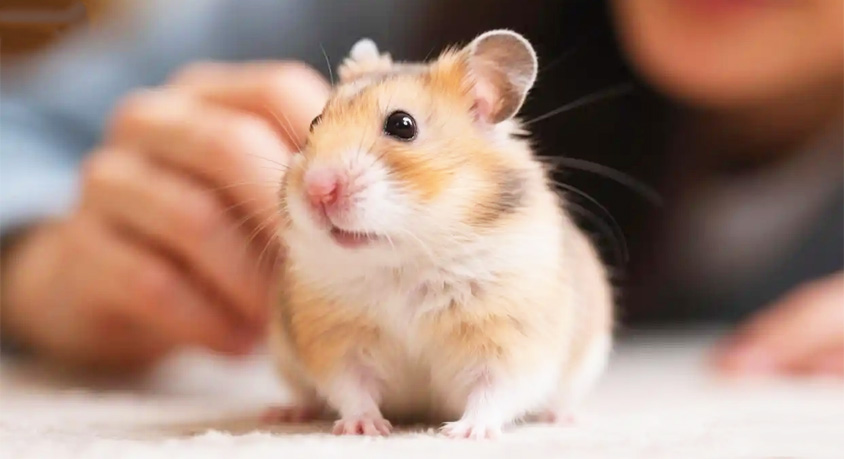
Not all freezes are equal. A hamster who freezes with their ears pricked forward is often just curious, absorbing a new scent.
A fear-based freeze is usually accompanied by a flattened body posture or even a slight tremble. If your hamster is freezing frequently, it may be a sign that their environment is too loud or their cage is placed in a high-traffic area. Understanding this distinction helps us move Pip’s home to a quieter corner where his nervous system can finally rest.
Small pet mental health is deeply tied to their ability to hide and "work" for their resources. If a hamster feels they have to freeze constantly, they are likely bored and anxious. Introducing variety through natural textures can provide a much-needed sense of security.
Using a natural seagrass foraging ball or a Timothy hay tunnel allows them to move between "safe zones" without feeling vulnerable. When a hamster has a complex, cluttered environment, you will notice the freezing behavior decrease. They transition from being a defensive statue to an active explorer because they know a multi-chamber wooden hideout is always just a few inches away.
The instinct when a hamster freezes is to reach out and touch them to see if they are okay. However, this often startles them further, reinforcing the "predator" fear. Instead, the best thing you can do for a frozen hamster is to speak softly and remain still yourself.
Rabbits and hamsters are incredibly sensitive to the vibration of the human voice. When Pip freezes, try humming or whispering his name. This "auditory anchoring" helps him identify you as a safe, familiar presence rather than a looming shadow.
Wait for them to "unfreeze" on their own terms. Once they resume grooming or eating, it’s a signal that their internal alarm system has reset. This is the perfect time to offer a small treat, teaching them that your presence leads to positive outcomes rather than "statue-inducing" fear.
The frozen hamster is a reminder that even the smallest hearts feel the weight of the world. Pip doesn't need much, but he does need a guardian who understands his silence. By recognizing that his stillness is a form of communication, we create a sanctuary where he can stop being a statue and start being a friend.
When we honor these micro-behaviors, we aren't just "keeping a pet." We are protecting a tiny life, ensuring that their world—though small—is full of safety, warmth, and the quiet confidence to move again.