Why Does Your Cat Suddenly Stop Purring Mid-Pet?
- Quick Tags: cat body language signs, feline overstimulation symptoms, cat anxiety relief, interactive cat toys
- Editor: Chloe Jones
- Updated: May,18,2026
- Views: 255k






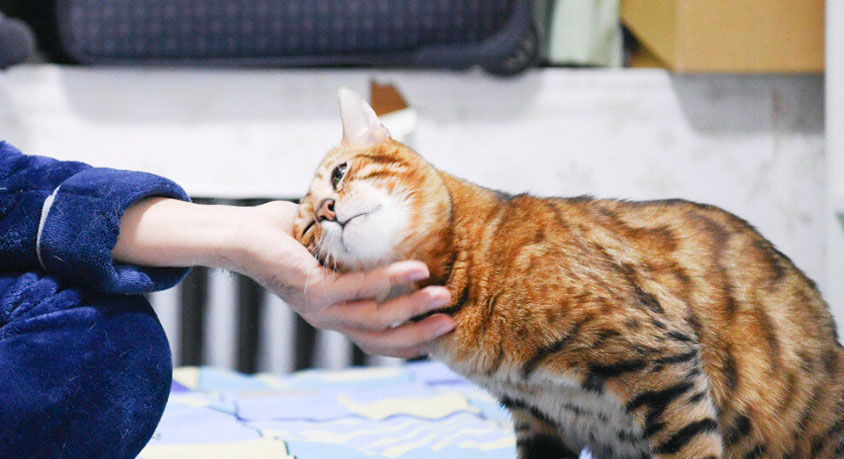
You are sitting on the sofa, the rhythmic vibration of a contented purr humming against your palm. Your cat, Luna, seems to be in a state of pure bliss. Then, in a split second, the air shifts. Her tail gives a sharp, rhythmic thud against the cushion, and her skin along her back begins to ripple like water in a breeze. Before you can withdraw your hand, she has turned with a dilated stare, perhaps even offering a "love bite" or a sudden bunny-kick to your forearm.
E.g. :No One Explains This Before You Buy a “Hypoallergenic” Cat
This confusing transition from affection to agitation is one of the most common reasons owners feel "rejected" by their feline companions. As a behavior consultant, I see the guilt in owners' eyes when they describe these moments. You aren't doing it wrong, and your cat isn't "bipolar." You are simply witnessing a biological threshold being crossed in real-time.
What we often interpret as a sudden mood swing is actually a physiological response known as overstimulation. Unlike dogs, who often have a high tolerance for repetitive physical touch, cats have incredibly sensitive hair follicles and a nervous system designed for short, intense bursts of interaction.
When we pet a cat for too long in the same spot, the tactile nerves can transition from sending "pleasure" signals to "pain" or "irritation" signals. It is a sensory overload. The cat isn't being mean; they are experiencing a physical sensation akin to static electricity or a localized itch they cannot scratch. Understanding this helps us move away from feeling hurt and toward becoming better observers of their silent vocabulary.
We have all seen it: a cat rolls over, exposing a fluffy, soft underbelly. To a human, this is an invitation for a rub. To a cat, however, showing the belly is often a sign of trust and relaxation, not a request for physical contact.
When you reach for that "forbidden fluff," you are touching the most vulnerable part of their anatomy, where their vital organs are unprotected. Challenging the idea that "all exposed bellies want pets" is the first step in building a deeper, more respectful bond. Many cats prefer "social rubbing"—where they initiate the contact by leaning their cheeks or foreheads against you—rather than being passively petted while lying down.
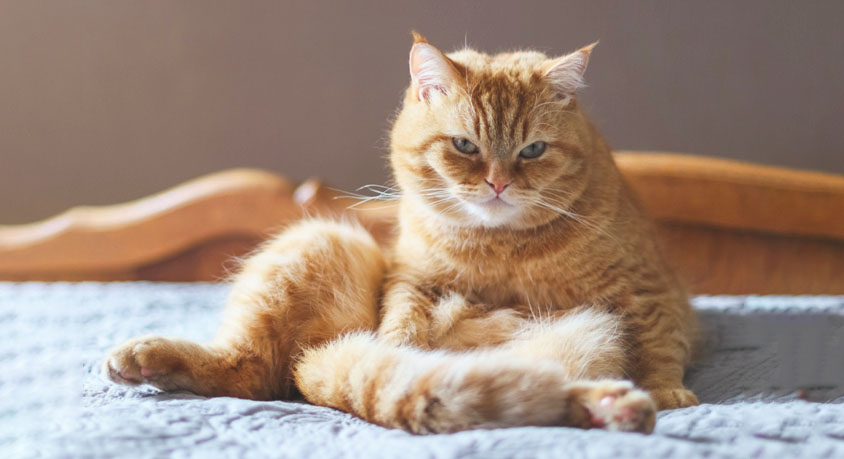
The tail is the most honest part of a cat’s body. While a dog wags for joy, a cat’s tail is a sophisticated barometer of their internal pressure.
Before a cat reacts, they almost always give a series of "micro-signals." These include ears that rotate slightly outward like airplane wings, skin twitching along the spine, or the cessation of purring. If the purr stops, the "consent" has been withdrawn. Learning to stop before the tail thumps is the secret to a cat that feels safe and understood in your home.
If your cat frequently exhibits "play aggression" or becomes overstimulated easily, they may have an excess of "predatory blue-print" energy that hasn't been spent. In the wild, a cat’s day is divided into hunt, kill, eat, groom, and sleep. In our living rooms, we often skip the "hunt" and "kill" phases, going straight to the "eat" and "sleep."
This creates a backlog of energy that often explodes during a petting session. Introducing high-quality interactive cat toys—especially wand toys that mimic the erratic movement of birds or mice—allows your cat to expend that neurological "charge" on an object rather than your hand.
To heal the relationship after a series of "petting-induced" nips, I recommend a protocol I call "The Three-Second Rule." Pet your cat for three seconds, then stop and pull your hand back slightly. If the cat nudges your hand or leans back in, they are giving consent for more. If they look away or remain still, the session is over.
For cats that are naturally more anxious or prone to low thresholds of touch, environmental aids can be a game-changer. Using a calming feline pheromone diffuser in the areas where you usually cuddle can lower their baseline cortisol levels.
Affection doesn't always have to be physical. Sometimes, the highest form of love a cat can show is "pillowing"—simply sleeping in the same room as you. When we stop demanding that our cats interact on human terms and start meeting them on feline terms, the "sudden" bites disappear, replaced by a quiet, steady trust.
Your cat's "micro-aggressions" are actually just their way of communicating a boundary they don't have words for. By watching for the ripple of the skin and the twitch of the tail, you are telling your cat: "I see you, I hear you, and I respect your space." This is the foundation of a truly therapeutic bond—one where both species feel safe, seen, and deeply loved.