Why your parrot plucks its feathers when you’re busy
- Quick Tags: parrot care, parrot behavioral signs, pet anxiety relief, bird care tips
- Editor: Alex Reynolds
- Updated: May,28,2026
- Views: 348.1k


You’re working at your desk, and out of the corner of your eye, you see your parrot plucking its chest feathers—one by one, leaving small bare spots on its body. You call its name, but it doesn’t stop, even when you offer its favorite treat. You’ve thought it’s just a bad habit or boredom, but this feather-plucking is a silent plea from your feathered friend.
E.g. :The pile of feathers under your parrot isn't vanity. So what is it?
We often think parrots pluck feathers out of mischief, but is that really true? Could this self-destructive behavior be a sign of hidden stress or unmet needs we’re missing?
Parrots are highly intelligent and social birds, and their behaviors are closely tied to their mental and emotional health. Feather-plucking is never random—it’s a coping mechanism for stress, anxiety, or discomfort. Unlike occasional preening (which is normal), compulsive feather-plucking can lead to serious skin damage and even infections.
Many parrot owners dismiss this behavior as "naughty," but it’s actually a cry for help. Parrots don’t pluck their feathers to annoy their owners; they do it because they’re in distress and don’t know how else to cope.
Sometimes, feather-plucking stems from physical discomfort. Dry skin, parasites, or nutritional deficiencies (like a lack of vitamin A) can make parrots itchy, leading them to pluck. Illnesses like infections or hormonal imbalances can also trigger the behavior. A quick vet check can rule out these physical causes.
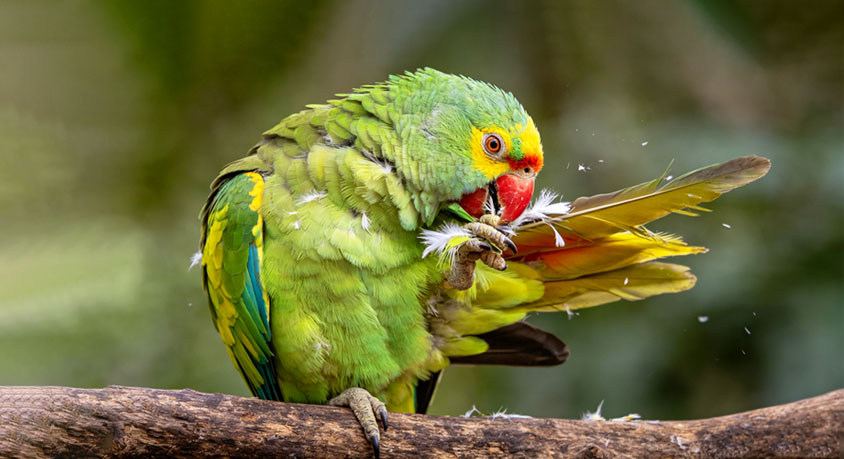
More often, feather-plucking is caused by emotional stress. Parrots thrive on social interaction—if you’re busy and don’t spend enough time with them, they may feel lonely and anxious. Changes in their environment (like a new pet, a move, or even a new piece of furniture) can also trigger stress. Boredom from a lack of toys or mental stimulation can also lead to feather-plucking.
Preventing feather-plucking starts with meeting your parrot’s physical and emotional needs. Make sure their diet is balanced—include fresh fruits, vegetables, and a high-quality parrot pellet mix to avoid nutritional deficiencies. Keep their cage clean and well-ventilated, and provide a shallow dish for bathing to keep their skin and feathers healthy.
Offer a variety of toys (like chew sticks, puzzle toys, and swings) to keep them mentally stimulated. Rotate the toys regularly to avoid boredom, as parrots easily get tired of the same things.
Relieving your parrot’s anxiety is key to stopping feather-plucking. Spend at least 30 minutes a day interacting with them—talking to them, playing, or teaching them simple tricks. This social time helps them feel loved and secure.
If you’re busy, leave a radio or TV on (at a low volume) to mimic human presence. A bird cage cover can also help them feel safe at night, reducing stress. Avoid sudden changes to their routine, as predictability helps parrots feel calm.
Parrots communicate through their behaviors, and feather-plucking is one of the most clear signals of distress. Learning to recognize this and other behavioral signs (like screaming, hiding, or loss of appetite) is essential for good parrot care.
Your parrot relies on you for its happiness and well-being. By noticing these small signals and responding with care, you can help your feathered friend stop feather-plucking and live a healthy, happy life. After all, the bond between a parrot and its owner is built on understanding and mutual care.