Why Your Cat Suddenly Swats Your Hand During Belly Rubs
- Quick Tags: Cat Body Language, Feline Overstimulation, Cat Behavior Problems, Pet Bonding Tips
- Editor: Chloe Jones
- Updated: Jun,07,2026
- Views: 200.5k


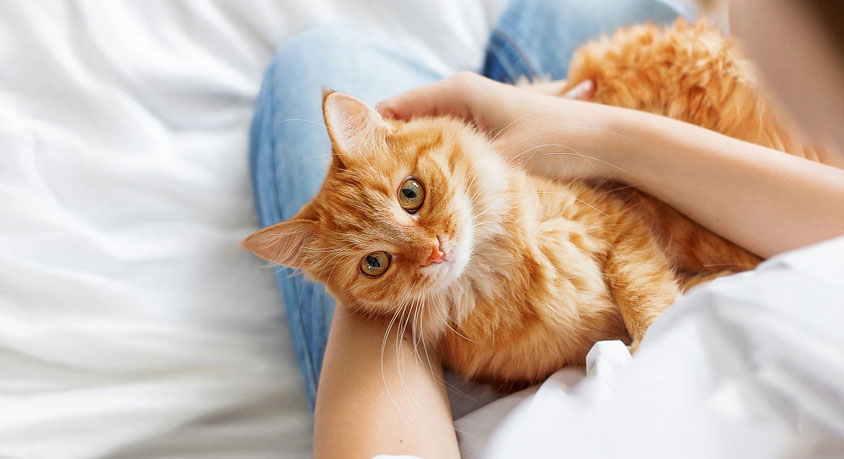
You are sitting on the sofa, and your cat, Luna, hops up beside you. She purrs loudly, rolls onto her back, and exposes that irresistibly soft, fluffy belly. It feels like an invitation, a grand gesture of trust. But the moment your fingers sink into her fur, her ears flick, her tail thrashes once, and—snap—her claws are wrapped around your wrist and her teeth are grazing your knuckles. You pull away, confused and perhaps a little hurt, wondering why she "asked" for love only to reject it with such sudden intensity.
E.g. :Why pets hide quietly after daily feeding
This "petting-induced aggression" is one of the most misunderstood chapters in the book of feline behavior. It isn't a betrayal, and your cat isn't "bipolar." In fact, that belly flash is rarely an invitation for a rub; it is a complex social signal that we have been misreading for decades.
In the world of canine companionship, a roll onto the back is a clear request for a scratch. In the feline world, however, exposing the belly is primarily a sign of ultimate comfort and security—it says, "I trust you enough to show you my most vulnerable organs."
When we interpret this as a green light to touch, we often violate that very trust. For many cats, the belly is a "no-go zone" protected by deep-seated evolutionary instincts. Challenging the idea that cats are "small dogs" is the first step toward a deeper, more respectful bond. When you reach for the belly, you aren't giving affection; you are triggering a defensive reflex.
Most cats don't bite without warning; they speak in a dialect of "micro-movements" that many owners miss. Before the swat happens, the cat’s nervous system is actually sending out several silent flares.
Watch the skin on your cat’s back. Does it ripple or twitch? Watch the base of the tail—is it thumping against the couch? These are signs of feline overstimulation. The physical sensation of being petted can quickly shift from pleasurable to irritating, or even painful, as the hair follicles become over-aroused. By the time the bite happens, your cat has likely been "shouting" for you to stop for several seconds.
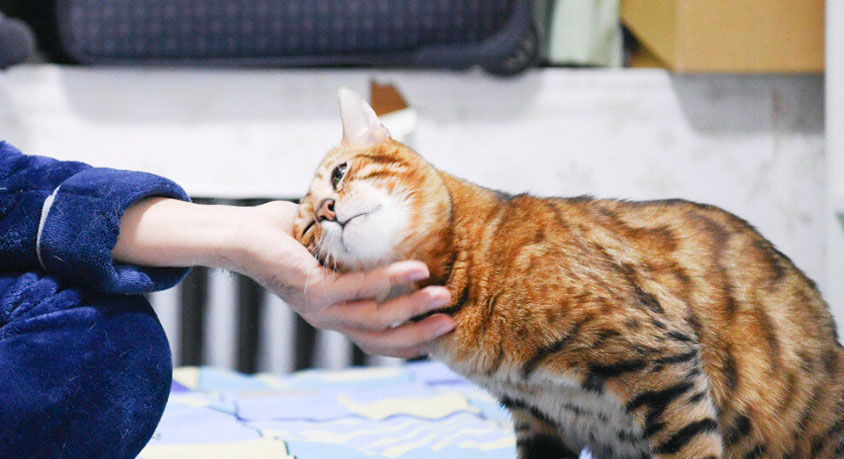
As a behaviorist, I always advocate for the "Consent Test." Instead of reaching out to grab or stroke your cat, offer your index finger about two inches from their nose. If they lean in and rub their cheek against you, they are consenting to a brief interaction.
Cats prefer to be touched in areas where their scent glands are most concentrated—the cheeks, the chin, and the base of the ears. When you focus your affection here using specialized pet supplies like a soft grooming brush, you are participating in a natural social grooming ritual (allogrooming) rather than an intrusive "human" hug. This builds a foundation of predictability that helps an anxious cat feel in control.
If you have a cat who frequently swats, you might find yourself feeling tense whenever they approach. This tension is felt by the cat, creating a cycle of mutual anxiety. It is important to remember that these bites are often "spatial boundary" corrections rather than acts of malice.
To rebuild that bridge, focus on "passive togetherness." Allow your cat to sit near you without the expectation of being touched. Use a plug-in pheromone diffuser to create a baseline of calm in the home. When you remove the pressure of physical contact, you often find that the cat begins to seek you out more frequently, secure in the knowledge that their boundaries will be respected.
There is a unique intimacy in a relationship where words aren't needed, but boundaries are understood. When we stop viewing our cats as toys to be cuddled and start seeing them as sentient beings with their own "personal bubble," the dynamic shifts beautifully.
Your cat’s decision to sleep near your feet or blink slowly at you from across the room is just as meaningful as a lap cuddle. By learning to read the quiet flick of a tail and the subtle ripple of fur, you aren't just becoming a better pet owner—you are becoming a trusted confidant. The next time Luna shows you her belly, try simply nodding back with a slow blink. You'll find that in the silence of that shared respect, your bond grows stronger than any belly rub could ever make it.