Why Your Sugar Glider Barks at 3 AM – Annoying Habit or Hidden SOS?
- Quick Tags: sugar glider barking, sugar glider sounds, sugar glider bonding, sugar glider cage setup
- Editor: Chloe Jones
- Updated: Jun,08,2026
- Views: 426.2k








You’re deep asleep. Then it starts: a sound like a tiny dog barking, over and over. You check your phone – 3:15 AM. Your sugar glider is at it again. You pull the pillow over your head and wonder, “Why does she do this every single night? Is she sick? Is she bored? Or does she just enjoy torturing me?”
E.g. :Senior Dog's Tail Hangs Limp at Pack Approach—Pain or Preference?
Most owners assume it’s normal noise – just a quirky pet being loud. But here’s the truth that exotic vets and behaviorists want you to hear: That midnight barking is not random. It’s a complex vocalization that can mean loneliness, fear, or even a health problem. And ignoring it could damage your bond forever.
A couple adopted a young sugar glider named Luna. She barked every night, sometimes for hours. They thought it was “just what gliders do.” They wore earplugs and let her be.
After six months, Luna stopped eating. She started over-grooming her tail until it was bald. A vet visit revealed severe depression. Luna was a single glider – and sugar gliders are colony animals. Her barking wasn’t random noise. It was a desperate call for a family that never came.
Challenge the conventional wisdom: In the wild, sugar gliders live in groups of 5-12. They bark to locate each other, warn of predators, and maintain social bonds. A lone glider in captivity barks because she is alone – and loneliness is physically painful for this species.
In many European countries, it is illegal to own a single sugar glider. The US has no such law, so thousands of gliders live in isolation.
Sugar gliders must be kept in pairs or small groups (same sex or neutered pairs). A single glider will develop stereotypies: pacing, over-grooming, self-mutilation, and constant barking.
The fix: Adopt a second glider of the same sex. Introduce them slowly in neutral territory (a bathroom or play tent) over 7-10 days. After bonding, the barking often stops completely.
One client adopted a friend for her lonely glider. “The first night they slept curled together, there was total silence,” she said. “I cried. She wasn’t being bad. She was begging.”
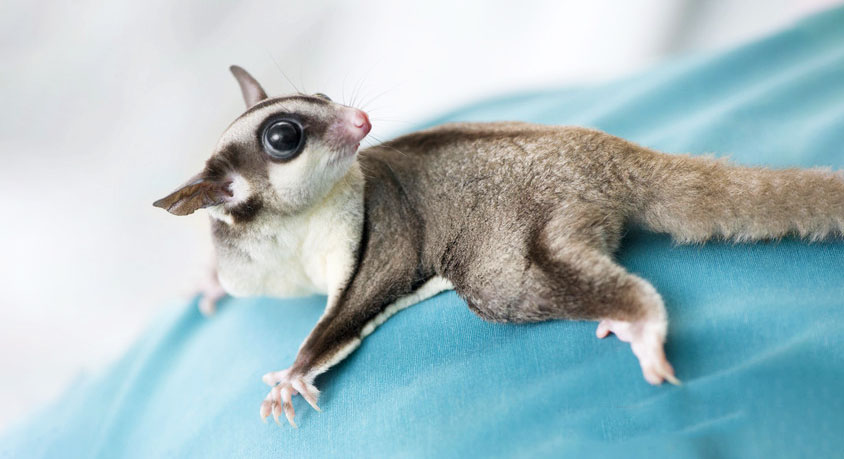
If you cannot get a second glider immediately, wear a bonding pouch against your chest for 4-6 hours daily. Your heartbeat, scent, and warmth mimic a colony mate. This reduces barking but does not replace a real companion.
Even with a pair, barking can continue if the cage setup is wrong.
Sugar gliders are arboreal. They need tall cages (minimum 24x24x36 inches for a pair). A small, wide cage causes stress barking.
The rule: Bigger is always better. Fill the upper half with branches, ropes, and sugar glider fleece toys (safe, no loose threads). A glider who can climb and glide feels secure – and barks less.
Gliders run miles each night in the wild. Without a wheel, pent-up energy turns into barking. A silent exercise wheel (solid surface, no mesh, 12-inch diameter) allows safe running.
Avoid wire wheels – they catch toes and tails. A quiet wheel means you sleep while she runs.
Gliders are strictly nocturnal. Turn off lights and noise at the same time each night. Cover the cage with a breathable fabric. A predictable schedule lowers anxiety barking.
Offer a small protein treat (mealworms, boiled egg) 30 minutes before you go to sleep. A full belly promotes quiet nesting.
If your glider makes a crabbing sound (like a tiny electric razor) combined with barking, she is terrified. Check for:
Remove the trigger immediately. Crabbing plus barking is a distress siren, not routine chatter.
A glider who suddenly barks more than usual – or barks during the day (they should sleep silently) – may be sick. Common causes:
The diet fix: Feed a staple of leadbeater’s mix (homemade or commercial) plus fresh vegetables, protein, and calcium powder. Avoid citrus, chocolate, and seeds.
If your glider barks non-stop for more than 20 minutes and does not respond to your presence, call an exotic vet.