You bought a bigger cage. Your guinea pig still hides all day. Here is why.
- Quick Tags: guinea pig hiding behavior, small pet enrichment, guinea pig anxiety, cage setup tips
- Editor: Chloe Jones
- Updated: May,04,2026
- Views: 280.1k

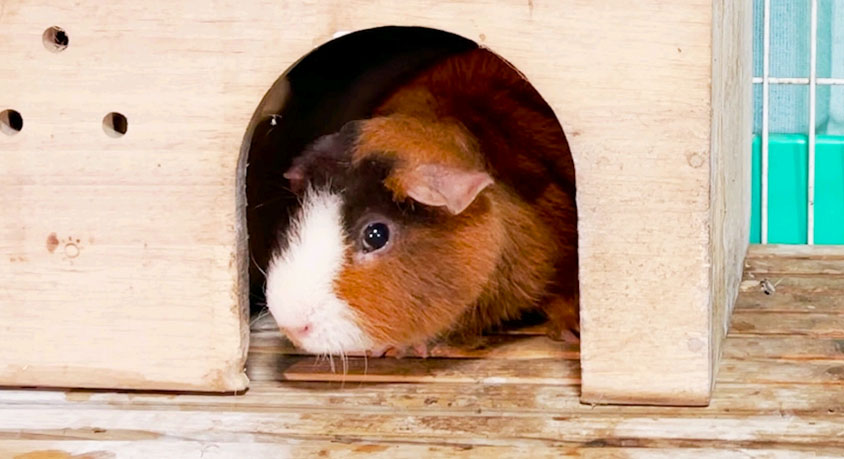
You spent hours setting up the new cage. Extra space. New toys. A cute wooden hideout. Your guinea pig, Marshmallow, darted into the hideout the moment you put him in. That was three days ago. You have barely seen him since. He only comes out at 2 AM when the room is dark and silent.
E.g. :Why Your Dog Still Pulls: Is the Leash Itself Teaching Tugging?
You feel rejected. Is he just shy?
That all-day hiding is not normal guinea pig personality. It is a signal that he does not feel safe in his own home. And a bigger cage will never fix that.
Guinea pigs are prey animals. Hiding is their first defense. But a healthy, confident guinea pig should also spend hours out in the open – eating, popcorning, interacting with cage mates, and napping in plain sight. If your pig only moves under cover of darkness, something is wrong.
The most common mistake is providing too few exits. A single hideout with one opening feels like a trap to a prey animal. Marshmallow goes in and then feels stuck because leaving means exposing himself.
Every hiding spot must have at least two openings. A tunnel, an arch, or an upside-down box with two doorways. This allows your guinea pig to escape without feeling cornered. Place these exits facing different directions. One toward the food bowl. One toward another hideout. Suddenly, the cage becomes a network, not a prison.
Many owners keep the house quiet to “help” their guinea pig relax. But total silence is unnatural. In the wild, quiet means a predator is near. A guinea pig who only moves in silence is constantly scanning for danger.
I worked with a family whose guinea pig, Coco, hid 22 hours a day. They added a small radio playing low talk radio at a consistent volume. Within four days, Coco started eating in the open. The steady background noise signaled “no predators nearby.” Coco now naps in the middle of the cage, stretched out like a furry pancake.
Try this: leave a talk radio or nature sounds on low during daylight hours. Turn it off at night. Your guinea pig will learn that sound means safety.
Guinea pigs are ground dwellers. They feel safest when they can see above them. An open-top cage with walls lower than their eye level makes them feel exposed from above. Birds. Ceiling fans. Even your hand reaching down.
Drape a light blanket over one corner of the cage to create a “canopy.” Not covering the whole cage – just one section. This gives Marshmallow a spot where nothing can approach from above. He can hide underneath and still see the rest of the room.
A fleece hideout that hangs or attaches to the cage bars gives a guinea pig a high-backed retreat. Unlike plastic igloos, fleece does not echo sounds. It also allows light to filter through softly, so your pig can see movement outside without feeling fully exposed.
Pair it with a tunnel system – two or three fabric tunnels connected – so Marshmallow can travel from the food bowl to the water bottle to the hideout without crossing open territory. This single change reduced hiding behavior in one of my client’s guinea pigs from 20 hours a day to 6.
Once you have added two-exit hides, background noise, and a canopy, try this: scatter small pieces of bell pepper or cucumber across the cage floor, not in a bowl. A confident guinea pig will walk out and graze. A still-nervous pig will grab one piece and retreat. That is fine. Keep scattering. Over days, he will stay out longer.
Sudden hiding in a previously outgoing guinea pig can mean pain. Dental issues (overgrown molars) are extremely common and cause a guinea pig to stop eating in the open because chewing hurts. Check his weight daily. If he loses 10% of his body weight while hiding, go to a small pet vet immediately.
Marshmallow now spends his afternoons sprawled on a timothy hay mat, feet kicked out behind him. His owner sits nearby and reads aloud. He no longer bolts when someone walks past. He just blinks and goes back to chewing.
Your guinea pig’s all-day hiding is not a personality flaw. It is a cage design problem written in his DNA. Give him escape routes, sound, cover from above – and watch a whole new pig emerge from the shadows.