8 hours on the wheel and still running – is your hamster stressed?
- Quick Tags: hamster repetitive behavior, small pet stress signs, cage enrichment ideas, hamster wheel safety
- Editor: Chloe Jones
- Updated: May,07,2026
- Views: 365k









You hear it all night. Squeak, squeak, squeak. Your dwarf hamster, Peanut, has been running on his wheel since midnight. It’s now 6 AM. He’s still going. You pull back the blanket and see his little legs moving in a blur. He doesn’t stop when you open the cage. He just keeps running.
E.g. :Your Rabbit Thumps at Night and the Surprising Truth About Small Pet Bondedness
You think: he must really love exercise.
That endless spinning is not joy. It is one of the most overlooked signs of small pet stress. And what you see as a happy hamster might actually be a trapped animal trying to escape.
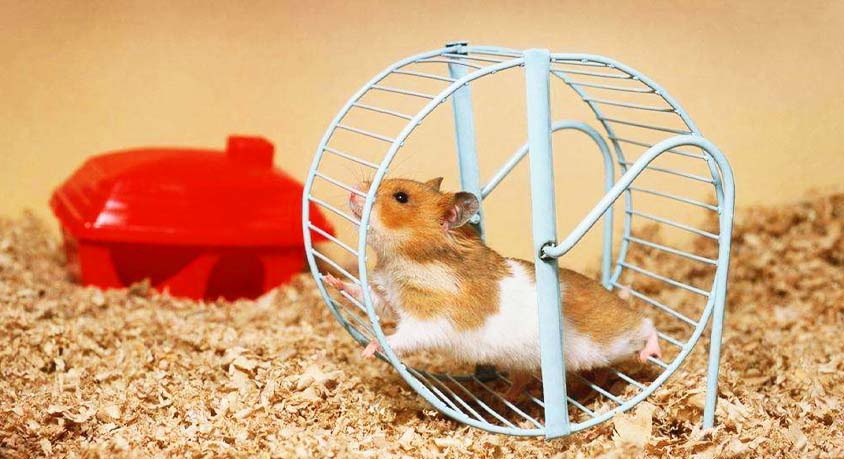
Hamsters in the wild run up to five miles a night searching for food and exploring territory. A wheel mimics that movement. That part is natural. But when a hamster runs for hours without pausing, without drinking, without even a moment of rest, the behavior flips from healthy to compulsive.
Repetitive running without context is called a stereotypy. It is the same neural mechanism that makes a zoo bear pace back and forth. The animal is not having fun. She is coping with an environment that does not meet her needs.
Watch your hamster right after she stops running. A healthy hamster will groom herself, sniff around, take a drink, or stash a piece of food. A stressed hamster will freeze, groom frantically in one spot, bite the cage bars, or immediately climb back onto the wheel. The wheel becomes an addiction, not a choice.
Many owners buy a large cage and a fancy wheel. Peanut still runs all night. They feel defeated. The problem is rarely size alone. It is boredom of the wrong kind.
Hamsters need three things most cages lack: deep bedding (at least 6 inches for burrowing), a sand bath for cleaning, and multiple hideouts that block light completely. Without these, the wheel becomes the only interesting object in an empty room. So the hamster runs. And runs. And runs.
I worked with a teenager named Leo. His Syrian hamster, Nugget, ran from 9 PM to 7 AM every single night. Leo added 8 inches of paper bedding, two cork tunnels, and a sand bath. Within three nights, Nugget ran only three hours total. The rest of the time she dug tunnels, rolled in the sand, and slept in a buried chamber. She was not “lazy.” She was finally living like a hamster.
Even if your hamster runs a normal amount, an unsafe wheel can cause pain that leads to more running – because pain also triggers repetitive pacing.
Replace any wire wheel with a solid-surface, appropriately sized silent wheel. Your hamster will run less but rest more. That is a good trade.
If your hamster runs obsessively even after enrichment upgrades, try removing the wheel for 48 hours. Replace it with a dig box (shredded paper with hidden treats) and a cork log. Many hamsters redirect their energy into healthier behaviors. Then reintroduce the wheel for limited time each night. You are the keeper of the wheel. You decide when it helps and when it harms.
A healthy hamster runs in bursts. A few minutes on, then off to drink or dig. An obsessive hamster runs continuously, ignores food nearby, and returns to the wheel immediately after any interruption. That pattern needs a vet check – pain, mites, or even a brain tumor can cause compulsive running.
Leo sends me photos of Nugget now. She is curled inside a cardboard tunnel, bedding tucked around her, legs twitching in sleep. The wheel sits unused most of the night. Leo used to think a silent hamster was a lazy hamster. Now he knows: a hamster who sleeps deeply is a hamster who feels safe.
Your hamster’s eight-hour marathon is not a fitness goal. It is a question written in repetitive footsteps. Give her a world worth stepping into – and watch the wheel finally slow down.