The duck who shakes his head after eating: joy or a throat full of rice?
- Quick Tags: duck head shaking, pet duck health, waterfowl respiratory infection, duck crop problems
- Editor: Chloe Jones
- Updated: Jun,16,2026
- Views: 331.1k




You scatter mealworms on the grass. Your pet duck, Quackers, gobbles them up. Then he shakes his head violently — side to side, beak open. Water droplets fly. “Silly boy,” you laugh. “Too excited to eat.”
E.g. :Leash Pulling: Why Does Your Dog Not Learn From Every Tug?
That night, Quackers sneezes. He shakes his head again, but no food is near. His eyes look watery. That shake was never a quirk. It was a blockage trying to clear itself.
Ducks shake their heads to clear debris from their nares (nostrils). A few shakes after eating or swimming is healthy. Head shaking in an empty pen, with no water or food, means irritation inside the head or throat.
One client’s duck shook his head for three days straight. She thought he had allergies. The vet found a piece of grass lodged in his nostril.
Not every head shake is an emergency. These three are not normal.
Quackers shakes, then sneezes clear or white bubbles from his nose. This is early respiratory infection. Ducks get aspergillosis from moldy bedding. Check your straw or wood shavings.
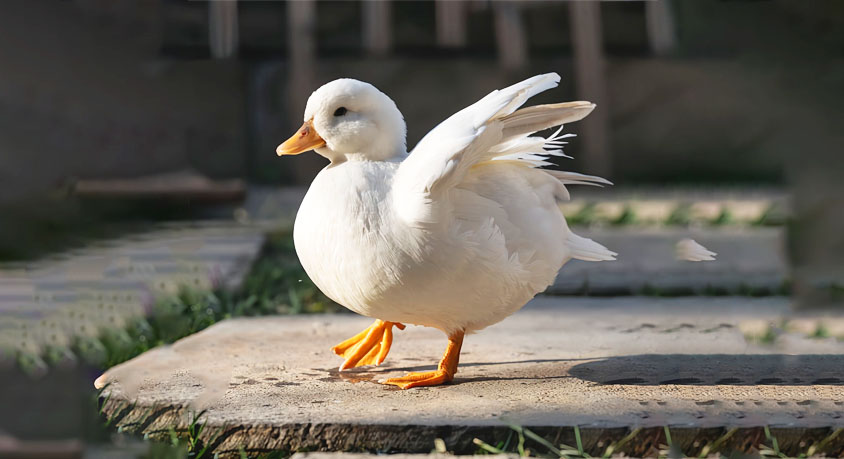
Quackers shakes and keeps his beak slightly open. His throat pulses. This is not a yawn. He has something stuck in his esophagus or crop.
Quackers shakes and his eyes run tears. Duck tears are not normal. This points to sinus infection or vitamin A deficiency.
Ducks hide illness until they cannot breathe. The head shake is often the first and only warning.
Gently wipe Quackers’ nostrils with a white tissue. Yellow or green discharge means pus. Clean the tissue daily. If color appears, call your vet.
Bring Quackers inside for one hour. A warm, dry environment stops allergy-like shaking from dust. If he still shakes indoors, the cause is infectious, not environmental.
A duck with slow crop clearance shakes his head to force food downward.
Feel Quackers’ crop before breakfast. It should be flat. A full, squishy crop in the morning means food did not empty overnight. Head shaking will continue until the crop clears. Offer only water for 12 hours and add poultry probiotic to food.
You can prevent the common causes.
Ducks need to submerge their whole head to clean nostrils. Provide a bowl deep enough for the entire bill. Change water twice daily. Stale water grows bacteria that infect sinuses.
Niacin deficiency causes neck and head tremors. Young ducks shake constantly. Add brewer’s yeast or duck-specific niacin supplement to food. Tremors stop within a week.
These red flags need professional care immediately.
Quackers shakes and wobbles. His legs give out. This could be botulism or a toxin.
Quackers shakes and red drips from his mouth. He may have ingested glass or a sharp object.
Continuous head shaking exhausts the duck. Dehydration follows quickly.
I worked with a duck named Lemon who shook his head for two weeks. His owner tried everything. We changed his bedding from pine shavings to hemp. The shaking stopped in two days. He had been inhaling fine dust.
“I thought he was being dramatic,” the owner said. “He was breathing tiny knives.”
Tonight, when your duck shakes his head, do not smile. Look at his nostrils. Feel his crop. Smell his bedding. That wet, whipping motion is not a dance. It is a sneeze, a gag, or a cough in a language without words. Learning which one is how you keep a happy paddle turning into a quiet goodbye.