The sudden bite while you pet your cat isn't hate. What is it?
- Quick Tags: petting-induced aggression, cat overstimulation, cat body language signs, sudden cat biting
- Editor: Chloe Jones
- Updated: May,13,2026
- Views: 411.6k









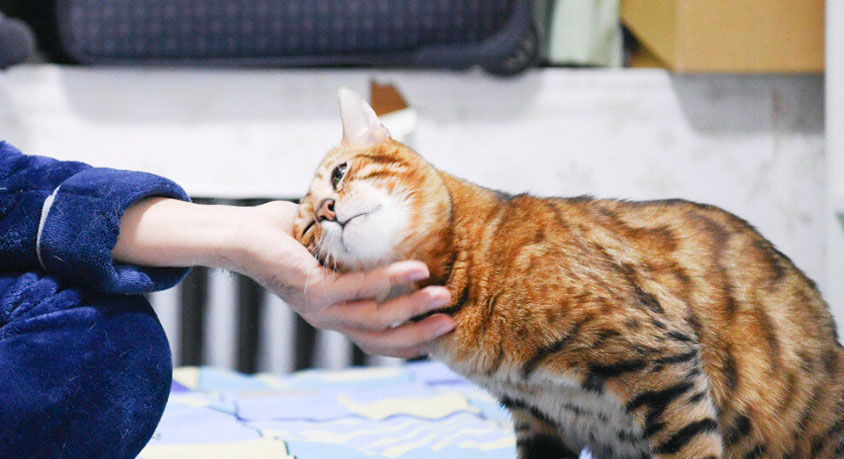
Your hand moves slowly down your cat’s back. She’s purring, eyes half-closed. Then, without warning – a quick turn of her head, ears flat, and teeth sink into your palm. You pull back, stunned.
E.g. :When a cat purrs, is it happiness or a hidden distress?
You feel betrayed. Did she suddenly hate you?
That bite isn’t hatred. It is one of the most misunderstood signals in cat behavior: petting-induced aggression.
Your cat asks for attention. She rubs against your hand. You oblige. Then, three strokes later, she bites. This confuses millions of owners. The truth is biological, not moody.
Cats have extremely sensitive skin. Their hair follicles are packed with nerve endings. What feels soothing to you can, after a few repetitions, become irritating or even painful.
Studies suggest the average cat tolerates only 2 to 5 seconds of repetitive stroking before sensory overload. The bite is not anger – it is a shutdown signal. She was saying “please stop” because her quieter signals were ignored.
This challenges a deep belief: that a purring cat always wants more touching. Purring can also mean self-soothing during stress. A cat may purr louder right before she bites – not from happiness, but from trying to calm down.
One client, Marco, adopted a rescue named Juno. Every evening, Juno jumped on his lap. After exactly four strokes, she’d whip around and bite. Marco thought she was “broken.” We slowed down – one stroke, pause, watch – and the biting stopped. He cried. “I thought she didn’t love me.” She loves you. She was just overwhelmed.
Your cat gives plenty of warning. Most owners just don’t read it. Learning cat body language signs prevents sudden cat biting.
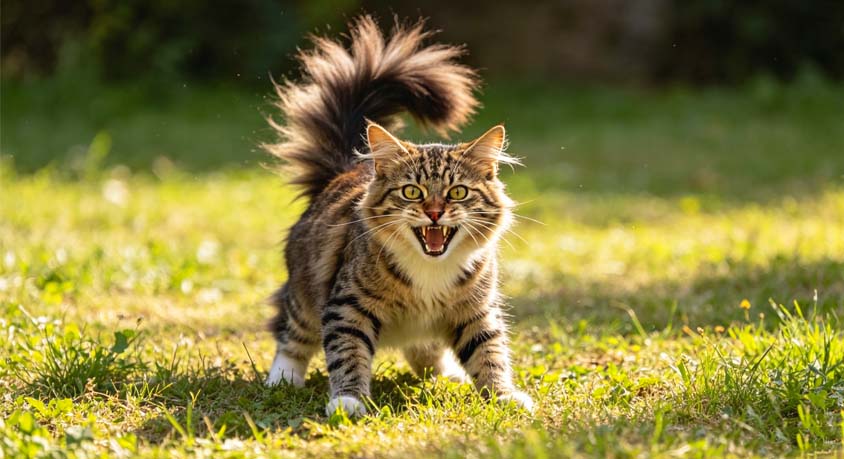
Stop touching the moment you see any of these. Rest your hand beside her. Let her choose.
Not all petting is equal. The base of the ears, under the chin, and cheeks are generally welcomed. The back, especially near the tail, is the most common trigger zone.
Pet your cat only on her head and neck, in short one-inch strokes. Pause every three seconds. Most petting-induced bites happen when humans stroke the full length of the back repeatedly. Keep your hands high and your pauses frequent.
You don’t need to stop petting. Shift to interactive play. A wand toy lets her hunt and bite something appropriate. After play, she may climb onto your lap for peaceful presence – not petting. That is still love.
If your cat bites even with gentle petting, consider temporary support. Calming cat wipes with L-theanine can reduce baseline sensitivity. A puzzle feeder before handling lowers stress by engaging natural foraging drive.
Marco and Juno now have a ritual. He offers one finger under her chin. She decides. Some days she wants scratches. Other days just sitting together. Both days, no bites.
Your cat’s sudden bite was never about hate. It was a small, sensitive body saying “too much.” Learn to hear her earlier. That is everything.