You walk past the terrarium. Your bearded dragon, Kiwi, lifts one front leg. She rotates it slowly in the air. A circle. Then another. Like a tiny athlete warming up. “She’s waving at me,” you say, waving back.
E.g. :The Old Dog's Unstirring Sleep: Is It Normal, Or a Silent Call?
That evening, Kiwi refuses her crickets. She hides under her log. The wave replays in your mind. Was that a hello or a helpless message?
Bearded dragon arm waving is not a greeting in the wild
In the Australian desert, a small or submissive bearded dragon waves at a larger one. The signal means “I see you. I am not a threat. Please do not attack.” It is a surrender flag, not a friendly wave.
When Kiwi waves at you, she sees a giant predator. Her body is saying “please do not eat me.” One of my clients praised his dragon for waving every morning. The dragon had chronic stress marks on its belly.
Reptile submission signal has three clear levels
Not every wave means high distress. But every wave means some level of unease.
The slow wave from a basking spot
Kiwi waves once or twice, then resumes eating. Her colors are bright. Her tail is relaxed. This is mild submission. She acknowledges your presence but does not panic. No action needed.
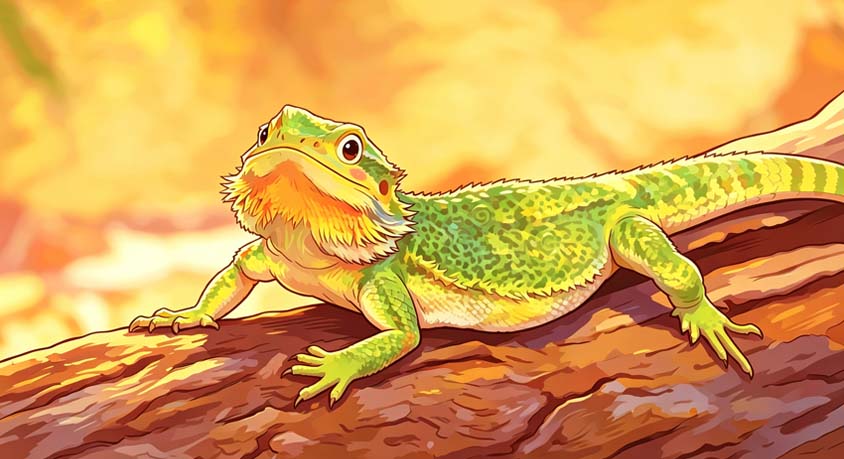
The repeated wave with flattened body
Kiwi waves five or six times, then presses her body flat against the rock. Her beard darkens slightly. This is clear submission. She feels threatened by your approach. Back away slowly. Do not reach into the tank immediately.
The wave paired with mouth gaping
Kiwi waves and opens her mouth. She does not hiss. But the open mouth adds a warning. She is terrified and one step from biting. This wave demands immediate space. Close the terrarium door and leave her alone for an hour.
Pet lizard stress often hides behind repetitive waving
A bearded dragon who waves every time you enter the room is not friendly. She is chronically anxious. The cause is usually visual exposure without escape.
The see-through terrarium problem
Glass tanks with no background on three sides make a dragon feel trapped. She sees you coming from all directions. Cover three sides of the tank with a terrarium background or craft paper. Many dragons stop excessive waving within two days.
The overhead shadow trigger
Bearded dragons have a third eye (parietal eye) on top of their heads. It detects shadows from above. If your ceiling light or your hand casts a moving shadow, the dragon may wave in fear. Always approach the tank from the side, never from above.
Two bearded dragon behavior fixes that reduce submission waving
You cannot eliminate all waving. But you can lower your dragon’s baseline fear.
The hand rest routine
Before picking Kiwi up, rest your flat hand inside the tank for two minutes. Do not move. Let her see, lick, and walk over your hand on her own. A dragon who chooses to climb onto your hand rarely waves at you afterward.
The hide cave placement
Place a hide cave on the cool side and another on the warm side. A dragon who can disappear from sight feels safer. Safe dragons wave much less often.
When arm waving means a vet visit
Sudden onset of waving in an adult dragon is different from a baby’s waves.
Waving after a fall
If Kiwi jumps from her branch and then waves repeatedly, she may have a spinal injury or internal pain. The wave becomes a flinch. Check for limping or dragging back legs.
Waving with black beard
A black beard paired with waving is not submission. It is conflicting signals – fear and aggression at once. This often appears with respiratory illness or severe pain. Call an exotic vet.
A calmer wave after small changes
I worked with a bearded dragon named Mango who waved at every human for eight months. Her owner thought she was charming. We covered three sides of the tank and moved the basking lamp to a corner. Mango stopped waving entirely.
“I miss her hello,” the owner said.
“You were never getting a hello,” I said. “You were getting a surrender. Now she finally feels safe enough not to surrender.”
Tonight, when your bearded dragon lifts her leg, do not wave back. Look at her belly. Watch her mouth. Check the shadows. That slow circle in the air is not a friendship dance. It is a quiet request for a smaller world – one where giants approach sideways and hiding spots always wait.