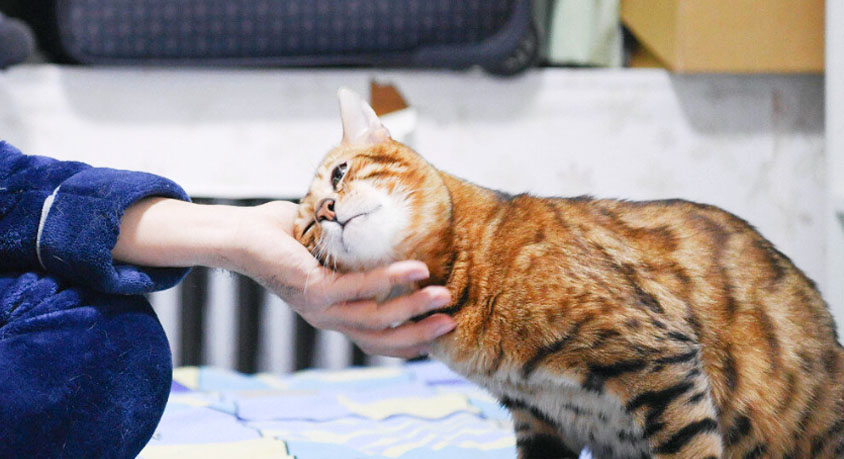
You change the litter once a week. Your cat smells a landfill on day three.
- Quick Tags: cat litter box avoidance, feline sense of smell, litter box cleaning schedule, cat bathroom habits
- Editor: Editorial Team
- Updated: Jun,21,2026
- Views: 498.1k





You scoop the litter box every morning. Once a week, you dump everything out, wash the box, and pour fresh litter. It smells clean to you. Maybe a faint scent, nothing more.
E.g. :The Silent Whisper: Why Your Bearded Dragon Keeps Waving at the Glass
Your cat disagrees. And she has forty times more scent receptors than you do.
By day three, she smells ammonia, old urine, and faint traces of her own waste. By day five, she is considering the potted plant. You think she is being picky. She is being hygienic.
A cat’s nose contains roughly 200 million scent receptors. Humans have 5 million. When you smell “a little overdue,” your cat smells a biohazard warning label. The litter box that passes your sniff test is often already unacceptable to her.
One of my clients, Grace, had a cat named Suki who started peeing on the bathroom mat. Grace was frustrated. Suki was healthy. We asked about the litter box schedule. Grace changed the litter every 10 days. To her, it seemed fine. To Suki, it was a crime scene. Switching to a full change every 4 days and adding a second box solved everything overnight.
Clumping litter should be scooped twice daily. The entire box should be emptied, scrubbed with mild soap (not bleach or ammonia), and refilled every 3-4 days for a single cat. For two cats, every 2-3 days. Mark it on your calendar. Your nose is not the judge.
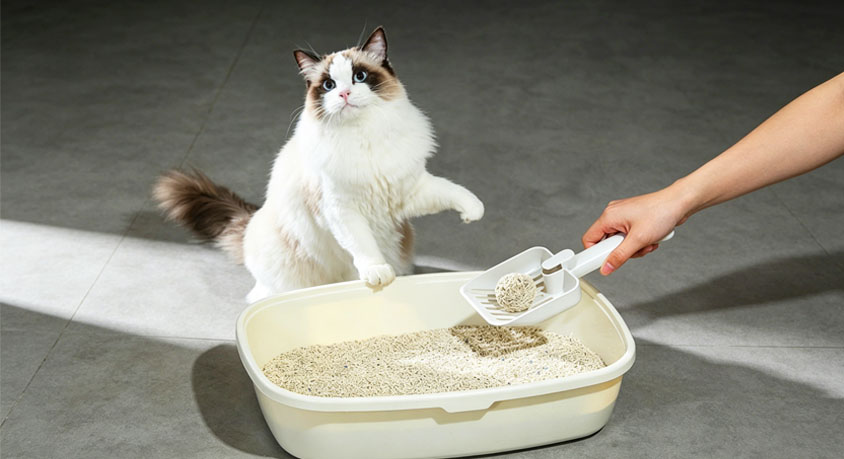
Many owners buy lavender or pine-scented litter to mask odors. This backfires catastrophically. Synthetic fragrances that smell “fresh” to you smell like chemical warfare to your cat. She cannot escape the scent in her own bathroom. So she stops using it.
A study on feline housing preferences showed that cats consistently choose unscented, fine-grain clumping litter over any scented option when given a choice. The same study found that boxes covered with a hood – popular for hiding smell – are rejected by most cats because trapped odors concentrate inside the dome.
Remove the hood. Use unscented litter. Place the box in a well-ventilated area but not next to loud appliances (washing machines terrify cats mid-use). These three changes alone resolve 40% of litter box avoidance cases.
A 20-pound bag of unscented clumping litter costs roughly $18. Changing every 4 days instead of every 7 uses about 30% more litter per month – an extra $6-8. One vet visit for a stress-related urinary issue costs $150-300. One ruined rug costs $200-800. Paying $8 a month to avoid those bills is the best return on investment in cat ownership.
Grace now changes Suki’s litter every 4 days. She buys litter in bulk to lower the per-change cost. She also added a second box in the guest bathroom. Suki has not eliminated outside the box in 14 months. Grace told me, “I was saving $8 a month and losing my sanity. I was the idiot in the equation.”
Day 1: Fresh. Cat uses it happily. Day 2: Slight ammonia. Cat still uses it. Day 3: Noticeable to her but not to you. Cat begins hesitating. Day 4: Avoidance behaviors start – sniffing the box, scratching the floor nearby, walking away. Day 5: Your cat finds a substitute (laundry basket, carpet, bath mat). Day 6: You clean the box and wonder why she started this “bad habit.”
Avoid the habit entirely by never reaching Day 4. Change the litter on Day 3.
Set a recurring phone alert for every 4 days. On the same day, wipe down the box with unscented soap and rinse thoroughly. If you travel, ask your pet sitter to do a full change mid-week. It takes 10 minutes. It saves years of frustration.
Grace now keeps a small whiteboard above the litter box. She marks the last full-change date. When she sees Day 4 approaching, she does not wait. She changes it early. Suki greets her at the door instead of hiding under the bed.
Your cat’s refusal to use the box is not spite. It is an honest review of a product you let expire. Change it earlier, lose the scent, lose the hood. Your nose is not the customer. Hers is. Listen to the one with 200 million receptors.