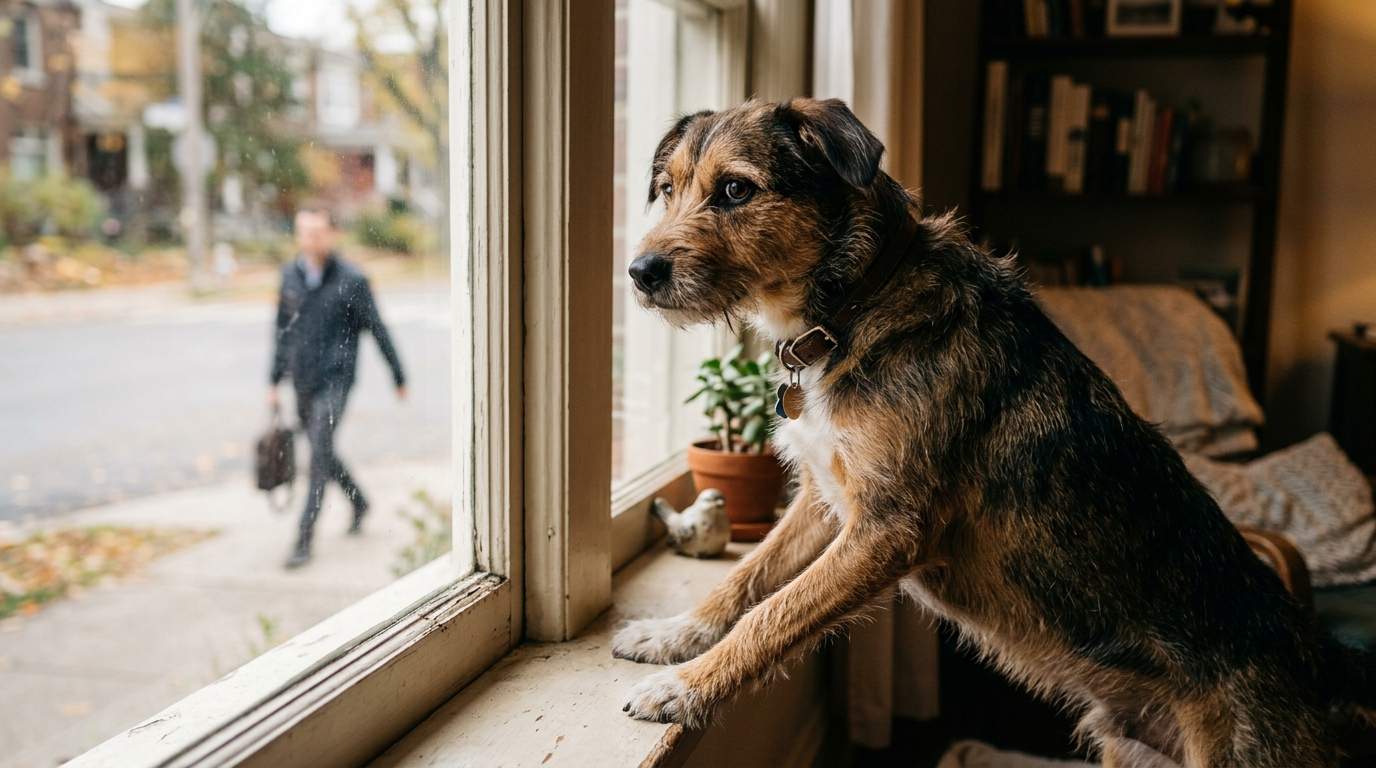
That familiar scene unfolds again: your dog, a picture of intense focus, presses their nose against the windowpane. A leaf skitters by, a person walks down the street, and suddenly, the quiet morning shatters into a symphony of barks. You’ve tried everything – a firm "no," gently pulling them away, even raising your voice in frustration. Yet, as soon as you turn your back, they're right there again, tail stiff, gaze fixed, barking as if their life depends on it. The constant noise makes relaxation impossible, and the worry about your neighbors grows. You're left feeling helpless, wondering if your beloved companion is just stubborn, or if there's something more you're missing.
E.g. :Why Your Senior Dog Stares at the Wall and the Gentle Art of Navigating the Sunset Years
Beyond the "Bad Dog": Decoding Your Dog's Window Barking Language
It's natural to interpret your dog's intense window barking as a protective instinct or even outright disobedience. We often think, "They're just being territorial," or "They know better." But what if this isn't a battle of wills, but rather a complex cry for help? As an internationally certified behavior consultant, I've seen countless dogs, from tiny Chihuahuas to majestic Great Danes, exhibit this behavior, and almost always, it stems from something deeper than mere naughtiness. For many dogs, incessant window barking is a sign of underlying anxiety, overstimulation, or even a profound sense of responsibility they feel to "alert" you to everything outside.
Imagine little Gus, a rescue terrier mix I once worked with. Every time a squirrel darted across his yard, Gus would erupt, trembling slightly as he barked. His owner initially thought he was just being aggressive, but when we looked closer, we saw a dog overwhelmed by the sudden movement, his body language speaking volumes about his internal stress, not just his desire to chase. Understanding why your dog barks at everything is the first step toward true healing.
The Vicious Cycle: How Our Reactions Can Fuel the Frenzy
It might feel intuitive to scold or punish your dog when they're barking excessively. After all, you want them to stop, right? Yet, this is often where the cycle deepens. When you yell "no!" or physically pull them away, your dog might interpret your heightened energy as you also reacting to the perceived "threat" outside. In their mind, you're joining their alarm, reinforcing their belief that there is indeed something to be worried about.
What "No" Sounds Like To Them: A Misunderstood Alarm
Your dog doesn't understand "no" as a command to cease barking at the window; they might hear it as "yes, let's both get agitated about the mail carrier!" or "this is a high-stakes situation that requires more barking." Their vigilant behavior is often self-reinforcing. Every time a person or dog passes, and your dog barks, and then that "threat" moves on, your dog might associate their barking with the "successful" departure of the stimulus. This accidental self-reinforcement makes the behavior stronger over time, proving to them that their vocal alerts are effective.
The Adrenaline Rush: Why Barking Feels Rewarding
For many reactive dogs, the act of barking itself releases adrenaline and other neurochemicals, which can be an intense, almost addictive, experience. It can temporarily relieve the internal tension they feel from being overstimulated. This isn't about being disobedient; it’s a physiological response that, without intervention, becomes their go-to coping mechanism for anything that triggers their unease from the window.
Creating a Calm Haven: Practical Steps to Reduce Window Reactivity
The good news is that you absolutely can help your dog find more peace by the window. It's not about "fixing" them, but about gently guiding them to a place of greater security. The simplest, most effective first step is often management. Can you make the window less accessible or less stimulating?
Consider using privacy window film on the lower half of the glass, or even a baby gate to block access during peak trigger times. If the view is the problem, removing the view can be a powerful intervention. This isn't forever, but it gives your dog's nervous system a much-needed break from constant alerts. Simultaneously, begin positive reinforcement training. When your dog is calm near the window (or even just not barking), reward that quiet behavior generously with high-value treats.
Beyond managing the visual triggers, there are wonderful tools to help your dog relax. A white noise machine placed near the window can help mask external sounds that might contribute to their barking. For dogs struggling with boredom or needing mental stimulation, a snuffle mat or puzzle toy filled with treats can redirect their focus and energy away from the window, engaging their minds in a positive way. These enrichment activities, combined with short, positive training sessions, help build confidence and reduce overall anxiety. Remember, the goal is to shift their mindset from hyper-vigilance to relaxed engagement.
A Journey of Understanding: Healing Both Ends of the Leash
Helping your dog overcome window reactivity is a journey, not a quick fix. There will be good days and challenging days, but with patience, empathy, and consistent positive methods, you can guide your dog toward a calmer, more peaceful existence. This process strengthens the beautiful bond you share, as you learn to understand their subtle signals and respond with compassion rather than frustration. You're not just quieting a bark; you're healing a heart. If you ever feel overwhelmed or progress stalls, don't hesitate to reach out to a professional certified behavior consultant. They can offer tailored strategies and support, helping both you and your dog thrive.