When your Pacman frog swells like a balloon: aggression or a drowning alarm?
- Quick Tags: Pacman frog bloating, horned frog health, reptile pet care, amphibian stress signs
- Editor: Chloe Jones
- Updated: Jun,19,2026
- Views: 492.1k



You mist your Pacman frog, Mochi. He sits half-buried in his substrate, round and plump. Then he puffs up even more. His sides expand. He looks like a grumpy grape. “He’s just showing off,” you think.
E.g. :The Sleeping Dog on Camera: Is Its Quietude a Hidden Language?
The next morning, Mochi floats in his water bowl. His belly is tight as a drum. He will not eat. That swollen shape suddenly looks less like attitude and more like a body filling with fluid it cannot release.
Frogs puff up to scare predators. But they also bloat when organs fail. The first is normal. The second is an emergency.
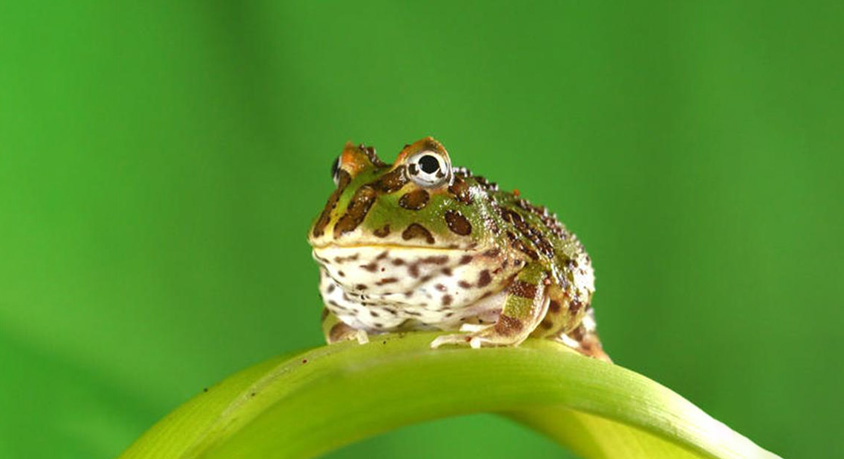
A threatened Pacman frog inflates his body, lifts his back legs, and opens his mouth wide. This is the classic “I am big, do not eat me” pose. He returns to normal size within minutes when the threat leaves.
A frog who stays swollen for hours, or who grows rounder without any trigger, often has edema. The kidneys or liver cannot filter fluids. The abdomen fills like a water balloon. This is not aggression. It is organ failure.
One of my clients lost her Pacman frog because she thought his constant bloating was “cute.” He had advanced kidney disease.
You do not need a vet degree. You need one quick test.
A defensively puffed frog raises his whole body off the ground. He stands tall on stiff legs. A medically bloated frog stays low. His belly touches the substrate. He cannot lift himself.
A healthy frog has smooth, moist skin. A bloated frog with edema looks shiny and tight – stretched like overfilled plastic wrap. Press gently. The skin may feel hard, not squishy.
Most edema cases start with subtle symptoms days before the balloon stage.
Pacman frogs soak occasionally to hydrate. A sick frog sits in the dish constantly. He is trying to absorb water through his skin to flush toxins his kidneys cannot process.
A bloated frog may release a flood of dilute urine. This is the body desperately trying to dump excess fluid. It means the kidneys are failing.
You cannot stop all causes of edema. But you can avoid the most common one.
Vitamin A deficiency causes kidney damage in amphibians. Feed Pacman frogs dusted insects with a supplement that contains vitamin A (not beta carotene). Lack of A leads to renal failure and the bloating that follows.
Change the water bowl daily. Use dechlorinated water only. Tap water with chloramines slowly poisons kidneys over months. The first visible sign is unexplained bloating.
Medical bloating rarely reverses at home. These signs mean go now.
Mochi puffs and keeps his mouth open. He is not yawning. Fluid is pressing on his lungs. He cannot breathe fully.
A Pacman frog with a pink or red underside has internal bleeding or severe infection. Edema with redness is a grave sign.
If Mochi’s legs look like tiny balloons, and he cannot pull them under his body, the fluid has spread to all tissues. Euthanasia may be the kindest option. Consult your vet.
I worked with a Pacman frog named Tater who bloated every evening. His owner thought it was funny. A water quality test showed high ammonia. After daily bowl changes and a vitamin A supplement, Tater stopped puffing up.
“I miss his angry balloon look,” the owner said.
“That was never anger,” I said. “That was a slow drowning.”
Tonight, when your Pacman frog swells, do not laugh. Watch his legs. Touch his belly. Check his water bowl. That round shape is not a mood. It is either a bluff or a breakdown. Learning to read which one is how you keep a tiny, grumpy potato alive for years instead of months.